
Author: bauser
Online SB-12 – Lesson 2
Online SB-12 – Lesson 1
[Online course] Deconstructing OBC SB-12 2017
This online course helps participants understand the Ontario Building Code 2017 SB-12 Energy Efficiency requirements.
In just a couple of hours, you will learn about the 2017 changes to the SB-12 Energy Efficiency requirements
Get all the insights and guidance you need to interpret the new requirements from the people who did the background analysis for the new SB-12 2017 energy efficiency requirements in the OBC.
Our past in-class OBC SB-12 Workshops in the last cycle were wildly successful with over 2,000 builders, building officials, and designers trained and prepared for 2012.
ABOUT THE EXPERT:

Michael Lio, P.Eng, M.Eng
buildABILITY Corporation
Michael Lio is Ontario’s foremost SB-12 expert. He has trained builders, building officials, and designers across Canada. His company has prepared the background analysis for the energy efficiency requirements of the Ontario Building Code since 1987. Most recently he did the background work for the SB-12 2017. Michael is a professional engineer who has consulted on projects and publications across North America relating to housing, energy efficiency and sustainability. His studies have supported the development of the Energy Star for New Homes program in Ontario, the EnerGuide Rating System, and the new R-2000 Programs. He has benchmarked the energy efficiency performance and greenhouse gas emissions of new and existing housing in Ontario. He taught in the architecture program at Ryerson University and at the University of Toronto for 27 years.
Please note: This is a technical workshop intended for building industry professionals. buildABILITY reserves the right to limit registration to individuals with the necessary demonstrated prerequisite knowledge and expertise.
If you have not cancelled yourself from the seminar within 48 hours or less prior to its commencement and you didn’t show up, you will be charged a full fee.
If you need to cancel yourself from a seminar and it is 48 hours or less you will be able to send someone else from your organization.
Fees for this course are non-refundable.
Rescheduling, relocating, or cancelling events is at the discretion of buildABILITY Corporation. Should this happen: we will provide a notice 5 days prior to the seminar, you will not be charged.
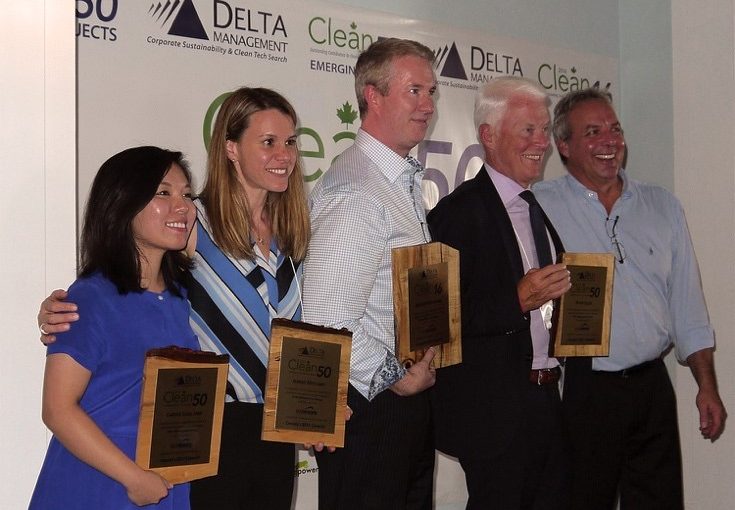
Candice Luck honoured as one of Canada’s 2017 Clean50 for driving net zero housing innovation
Candice Luck honoured as one of Canada’s 2017 Clean50
for driving net zero housing innovation
TORONTO, SEPTEMBER 26, 2016—buildABILITY Corporation is proud to announce that our Director of Strategy & Programs, Ms. Candice Luck, is the recipient of Canada’s 2017 Clean50 award for her efforts in net zero energy housing innovation and adoption. She is one of 50 honourees in Canada to receive this recognition for 2017.
At the young age of 30, Candice is the project leader on an over $4 million initiative that doubled the number of net zero energy homes built in Canada—homes that, over the course of the year, generate as much energy as the occupants consume. Her pivotal role in unifying a team of production builders, regional consultants, and product manufacturers made the construction of 26 net zero homes in five communities across Canada a reality. The project successfully demonstrated to homebuilders the feasibility of building net zero and paved the way for widespread acceptance and industry adoption of net zero energy housing. With a focus on clean energy and green building in the recent Canadian federal budget, the project has given builders across Canada the opportunity to witness and learn about net zero in their own communities.
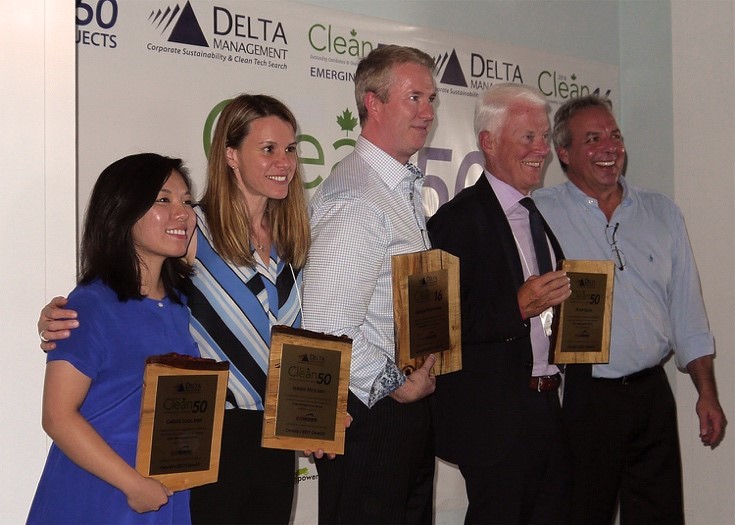
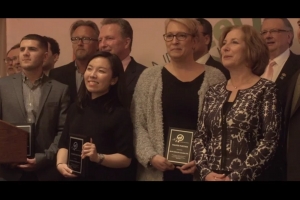
Left to Right: Candice Luck, buildABILITY Corporation; Jeanne Medland, KingSett Capital; Andrew Bowerbank, EllisDon Corporation; Philip Gillin, Sun Life Financial; Gavin Pitchford, Delta Management
Canada’s Clean50 is rooted in sustainability and fostering collaboration between all segments of Canadian life. Clean50 annually recognizes 50 leaders from 16 different categories who have done the most to advance the cause of sustainability and clean capitalism in Canada over the past 2 years. A Summit is hosted annually to give honourees the opportunity to build connections, share inspiration, and tackle common sustainability challenges.
“The Clean50 come from such a broad array of backgrounds, such that only a few individuals are able to be recognized within any given category. To receive a Clean50 award is truly indicative of both industry and personal leadership in the Building category,” said Gavin Pitchford, CEO, Delta Management Group. “Candice Luck was chosen after rigorous screening and research by Delta Management, with advice from internal researchers and external advisors, and was among honourees selected from an initial pool of over 500 well qualified nominees.”
This is a major accomplishment for Candice Luck as other 2017 Clean50 honourees include Ontario’s Minister of Environment and Climate Change – Glen Murray, Environmental Commissioner of Ontario – Dr. Dianne Saxe, Alberta’s Premier – Rachel Notley, Former President of Shell Canada – Lorraine Mitchelmore, CEO of NRStor – Annette Verschuren, CEO of ecobee – Stuart Lombard, CEO of Plug’n Drive – Cara Clairman, CEO of the Toronto and Region Conservation Authority, Brian Denney and fellow building category winner, Andrew Bowerbank of EllisDon Corporation.
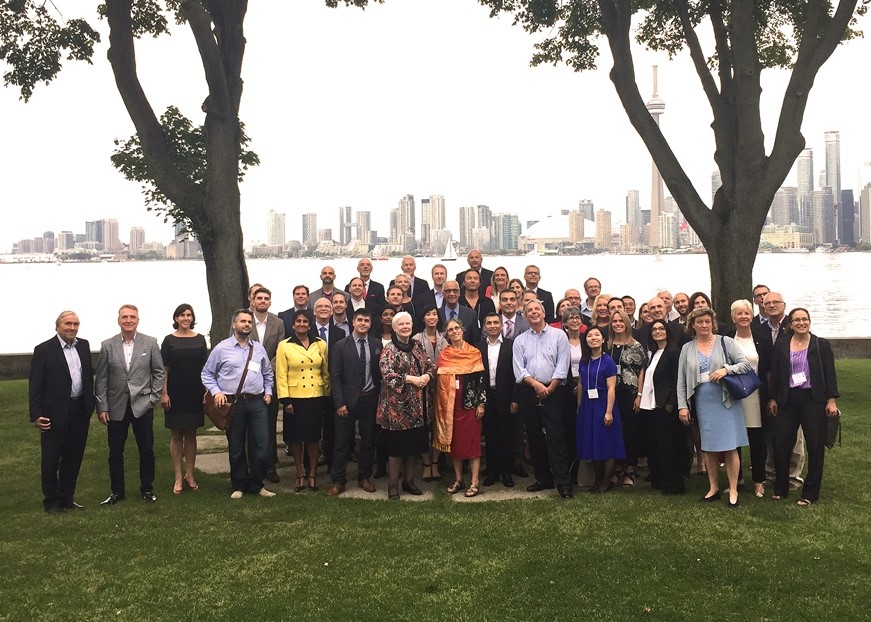
Canada’s 2017 Clean50 honourees pictured here with the Honourable Elizabeth Dowdeswell, Lieutenant Governor General of Ontario (centre) at the Clean50 Summit hosted in Toronto on September 22.
“I am honoured and humbled to receive the 2017 Clean50 award for my work in net zero housing innovation. I am very lucky to be surrounded by intelligent, creative and innovative people at buildABILITY who truly care about the buildings that house people,” says Candice Luck. “Net zero energy housing is an emerging innovation that will help shield consumers from rising energy costs while reducing greenhouse gas emissions and improving the home’s resiliency. This award signifies to me that we are on the right path as we strive for better. There is more work to be done to make net zero energy housing a reality for all Canadians.”
– 30 –
About buildABILITY Corporation:
buildABILITY is an innovation consulting firm for the homebuilding industry and strives to help build better homes for Canadians. With a deep understanding and expertise in housing, buildABILITY is able to act as a catalyst for change. buildABILITY has worked with builders, governments, manufacturers, utilities, and associations, facilitating the adoption of new technologies and processes, assisting with the adaption to new building requirements, and helping their clients change to become top competitors and leaders.
Media Contact:
Candice Luck
416-961-3487
candice@buildability.ca
About Delta Management Group and Canada’s Clean50:
Leading sustainability and clean tech search firm Delta Management Group in 2011 founded, and remains the steward of the Canada’s Clean50 awards, created to annually identify, recognize and connect 50 sustainability leaders from every sector of Canadian endeavor, in order to facilitate understanding, collaboration and innovation in the fight to keep climate change impacts below 1.5 degrees. Ancillary awards also recognize 10 Emerging Leaders and the Top 15 Sustainability Projects of the year.
Media Contact:
Gavin Pitchford
416-925-2005 x 2300
gpitchford@deltamanagement.com
For more information about Canada’s Clean50, please visit www.clean50.com
To read the original press release, please visit: http://www.newswire.ca/news-releases/candice-luck-honoured-as-one-of-canadas-2017-clean50-for-driving-net-zero-housing-innovation-594840761.html
[Online Order] This Is Exceptional Customer Service: A Definitive Guidebook for Builders

Did you miss your chance to buy our latest publication – Delivering Exceptional Customer Service: A Definitive Guidebook for Builders?
You can order your copy online!
Today, customer service delivery has become the most important factor that contributes to customer satisfaction. Builders are looking for better ways to understand and serve their customers. The objective of this book, published by buildABILITY, is to establish a set of best practices that help builders deliver improved customer satisfaction and achieve desired customer outcomes during the new home buying process.
At the end of this book, you will learn how to explain the most important factors of service excellence and how to implement them in an effective strategy and plan. You will understand how to provide good customer service throughout the home buying process. You will understand the causes of customer dissatisfaction and disputes, and learn how to resolve them effectively. You will be able to navigate through difficult conversations with customers to produce win-win results. You will learn how to manage customer expectations and understand how they can affect customer service.
Regardless if you are a new builder, or an experienced one with a thirst to learn, the theories and techniques divulged in this book will help you understand your customer and deliver exceptional and unforgettable customer service.

The Globe and Mail: Housing Consulting Group Pursues a Mass-Market Net-Zero Home
The Globe and Mail has featured us in an article for our participation in the Net Zero Energy Homes Project.
Net Zero Energy is an aspirational goal and there’s a lot more work to be done. Join us on our next adventure to make Net Zero Energy a reality!
Housing consulting group pursues a mass-market net-zero home
John Bentley Mays
Special to The Globe and Mail
Published
Among the ideas about housing afloat in official Ottawa these days, few are more potentially significant over the long haul than the dream of the net zero energy (NZE) home. That’s a house, affordable and constructed for Canadian winters, that produces as much energy as it consumes over the course of a year. Theoretically, this means the homeowner might pay net nothing annually for heat, cool air and light – while usefully taking a load off the country’s power grid.
For its part, the federal government has been encouraging the translation of this dream into reality. But Canada’s suppliers of mass-market houses, mindful of market whims and the bottom line, have so far proven reluctant to invest in super-efficient residential buildings.
Enter, about four years ago, buildABILITY Corporation (bC), a for-profit consulting group whose principal client is the housing industry. The company, in co-operation with the federal ministry of natural resources and insulation and roofing products manufacturer Owens Corning Canada, had a plan for showing the industry, once and for all, that mass-produced NZE houses are feasible and desirable – and they aimed to get the industry itself to do the heavy lifting for their experiment.
For their first net-zero home as part of the Eco-Energy program, Reid’s Heritage Homes adapted one of their most popular home designs by adding a covered porch so they could accommodate 8 kilowatts of solar PV. (David Dodge / buildABILITY Corporation)
Backed by some $2-million in public money – the cash was earmarked for consultants’ fees and up-front design costs – bC recruited five Canadian developers whose task it would be to construct, at their own expense, 26 NZE case-study homes, prototypes ready for the market and suitable for future factory manufacture. Before the $4.2-million demonstration project was completed earlier this year, Construction Voyer had put up a three-storey, six-unit NZE condominium complex in Laval, and Minto Communities had done a detached NZE home and four townhouses in the Ottawa suburb of Kanata. Mattamy Homes constructed five detached houses in Calgary, while Provident Development and Reid’s Heritage Homes contributed five each in Halifax and Guelph, Ontario.
The efficiency of these houses has been largely promoted by the stepped-up use of familiar technologies and techniques and the establishment of a high-performing building envelope – nothing exotic or avant-garde – I was told by bC president Michael Lio and by Candice Luck, bC’s director of strategy and programmes and the project manager from the outset.
Mattamy Homes Net Zero Energy Homes in Calgary, Alberta. Energy-generating solar photovoltaics are installed on the south-facing roofs to offset energy use. (buildABILITY Corporation)
The NZE standards that each developer agreed to meet were designed during what Mr. Lio called “a national charette” held at the beginning of the process. All windows were to be triple-glazed. Rigid insulation in the walls, extra insulation under the roof and an exterior air barrier would curb energy leakage. An air source heat pump, effective down to -30 degrees Celsius, would be the principal device for warming the house, eliminating the need for a furnace. Power for appliances and lights was to be generated by photovoltaic cells installed on the roof.While such thriftiness is welcome anywhere, it might have been interesting to see how this venture in efficiency played out, say, in an inner-city high rise or a dwelling designed by an architect on the leading edge of his or her art. All in all, bC’s project has been a very suburban affair. The building sites are in suburbia. While a couple have also had experience with condominium towers, all the selected builders made their mark in the suburban, low-density housing market, and they have continued to do here what made them commercially successful in the past. The images I’ve seen of these NZE homes show entirely predictable façades and interior layouts, and nothing at all that expresses their sophisticated innards.
Construction Voyer’s Net Zero Energy Condo in Laval Quebec. Energy-generating solar photovoltaics are installed on this condo to offset energy use. (buildABILITY Corporation)
But if they remind one of sprawl, that’s because they are supposed to.“There is nothing odd about how one would live in one of these houses,” Mr. Lio said. “They walk and talk like regular houses. Our focus has been on production house design. Suburban style housing is the dominant housing form across Canada.”
Operating them effectively, however, will require common sense on the part of residents. “The houses are only net zero energy in simulation. If [the home-owners] keep the TV on all night, or sleep with the windows open, they won’t work.”
Reid’s Heritage Homes Net Zero Home in Guelph, Ontario. Installation of roof trusses. (buildABILITY Corporation)
It is still too early to tell if they work as well as Mr. Lio and Ms. Luck predict. The last one went on the market, after all, only in February. Because NZE performance is calculated on a yearly basis, we won’t know for some time if these dwellings live up to their billing.Meanwhile, there are few signs that the Canadian housing industry is ready to change its mind about putting such houses on an assembly-line footing. For one thing, NZE is expensive. One of Mattamy’s NZE houses in Calgary, for example, has sold for $459,000, a price roughly comparable to that of an ordinary home in the neighbourhood. But, as Ms. Luck pointed out, the price-tag would have been 15 per cent more, had the developers not been subsidized to the tune of $2-million.
Construction Voyer’s Net Zero Energy Condo in Laval, Quebec. A super-airtight and insulated envelope under construction. (buildABILITY Corporation)
Nor does it appear that public regulatory regimes at the provincial and local levels are about to encourage NZE construction on a large scale.“There are huge barriers to seeing these houses built in large numbers,” Mr. Lio said, while maintaining that the project “demonstrated their technological feasibility in a production setting.” NZE for the millions, for the time being at least, remains an engaging, suggestive dream shared by many in government and industry, in Canada and throughout the world – but a dream nonetheless.


To read the article on The Globe and Mail, visit here: http://www.theglobeandmail.com/real-estate/toronto/housing-consulting-group-pursues-a-mass-market-net-zero-home/article31875389/
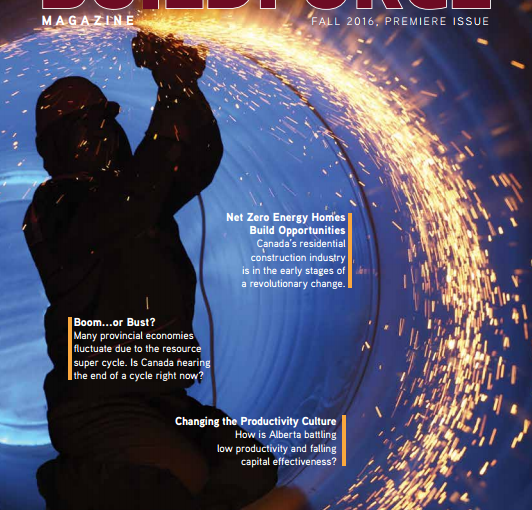
Why Trades Should Care About Net Zero
In the Fall 2016 Premiere Issue of Build Force Magazine, Sonja Winkelmann, Director of Net Zero Energy Housing at CHBA, writes about Net Zero Energy Homes and mentions buildABILITY’s role in the Net Zero Energy Pilot Project:
…
The five builders were supported by
a strong technical team that guided
them through the initial design process
and helped them address the
particular challenges of applying Net
Zero Energy construction in a production
building environment.The lead consulting firm was
buildABILITY, and was assisted by
energy advisors from across the country.
The process began with a design
charrette that brought builders and
consultants together to focus on how
best to achieve NZE by adapting
the traditional building techniques
and trades roles typical to a subdivision-
scale production building site.While a number of NZE homes had
been built in Canada prior to the pilot
project, most involved custom construction
approaches on “one-off” houses,
where a single team of trades and site
managers work together as a team,
through the entire build process.Production building relies on a more
sequential process where trades cycle
through a site, each carrying out a
specific part of the overall process using
standardized techniques. This results in
a high degree of efficiency, but makes
the introduction of innovative techniques
and a more integrative building process
more challenging.…
To read the full article in Build Force Magazine, please visit: http://www.buildforce.ca/sites/buildforce/files/pdf/BuildForce_Magazine_Premiere_Issue_Fall_2006.pdf#page=22
Building Tomorrow, Today: The Owens Corning Canada Net Zero Story
For the past four years, buildABILITY worked with Owens Corning Canada, NRCan, and five leading builders across Canada to build 26 net zero energy homes. Watch our journey here:
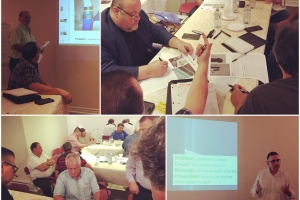
Mentoring Innovation with New Home Builders
How to reduce defects? Co-create with the experts – the trades!
Mentoring Innovation with New Home Builders
Michael Lio
July 5, 2016
I took my first R-2000 workshop in 1982. Natural Resources Canada (NRCan) mounted these workshops to make builders aware of this new innovative way to build and also to demonstrate some of the new practices that define R-2000. Three facilitators (including one builder) talked about insulation, did live demonstrations on poly wrapping windows, and led multiple HOTCAN (HOT-2000’s predecessor) modelling exercises for the builders in the room. Thousands of builders attended these workshops over more than 20 years. Despite the enormous training effort, R-2000 housing starts never captured more than a few percent of the market.
What became clear later, when we introduced Energy Star into the Ontario market, was that it was completely unreasonable to expect builders to be able to understand and adopt complex R-2000 practices by attending a workshop. Perhaps the junior staff person, who was assigned to attend the workshop, understood the implications of adopting the innovation, but they could never communicate all of the implied changes to the rest of the company, let alone to the trades who actually built the houses.
Ten years ago we suggested to NRCan that workshops alone should not be relied on as means to facilitate change in the homebuilding marketplace. We suggested that workshops build awareness but that deep engagement and mentoring was needed with individual builders over an extended period of time to truly build enduring change. NRcan supported the Building Canada initiative to do just that. Building Canada engaged and mentored just 4% of registered Energy Star builders. These builders, however, labelled almost 50% of all of the Energy Star houses during that same period.
…
To read more here, visit here: https://www.linkedin.com/pulse/mentoring-innovation-new-home-builders-michael-lio