Real Estate News Exchange featured buildABILITY Corporation and the Net Zero Energy Housing Project. Check out the article here.
Author: bauser
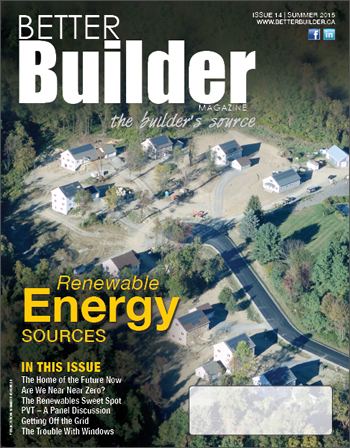
Better Builder: Taking Water Heating to New Heights in Net Zero Housing Communities in Canada
Taking Water Heating to New Heights in Net Zero Housing Communities in Canada
Michael Lio, President, buildABILITY Corporation
Fifty-seven minutes, that is the average time my teenager spends in the shower. Yes, the engineer in me compels me to analyse all the energy use in my household. Meanwhile, my youngest takes less than 5 minutes in the shower – but I’ll leave that story for another time. Hot water usage varies from one household to another depending on the number of occupants, the behaviour of the occupants, and an entirely separate, but very important contributing factor: how many teenagers you have.
When designing a custom home, the builder and designer can factor in the behaviours of family members, making a net zero performance-based design more feasible. However, when we are talking about large scale net zero housing in a production setting, builders and designers need to make assumptions about occupant behaviour and design net zero based on typical behaviours. So what should we assume for the amount of hot water used for showering?
Natural Resources Canada’s CanmetENERGY research on hot water energy consumption shows that a typical electrically heated home consumes about 4,300 kWh of electricity for heating domestic hot water with an annual cost of about $470 per household. CanmetENERGY has analysed hundreds of housing data points to determine an average hot water heating load of 143L/day per household based on the average behaviours of 2 adults and 1 child. The latest NRCan voluntary energy efficiency housing programs (R-2000 Net Zero Pilot) currently use this assumption.
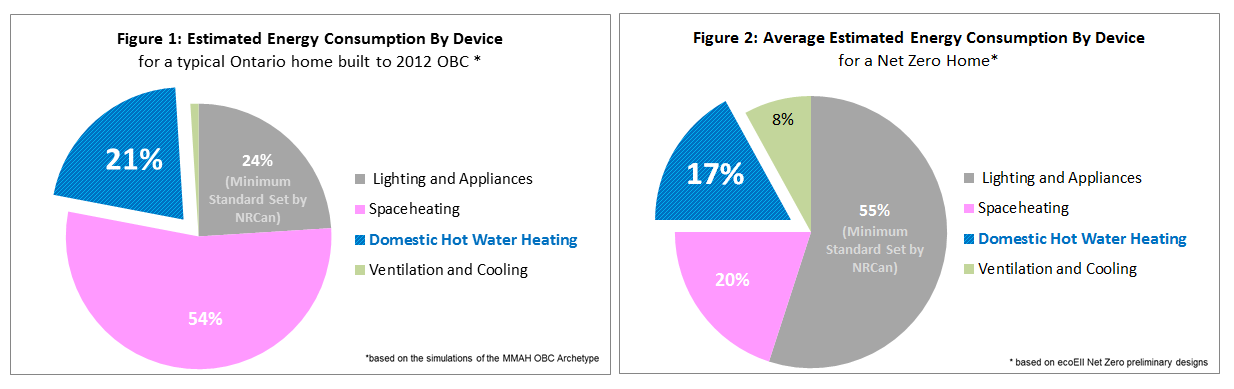
As the housing industry moves towards very energy efficient housing design (e.g. net zero), reducing the water heating load becomes very important. Figure 1 summarizes the estimated energy consumption breakdown of a typical 2012 OBC-built single detached home. While over 50% of the estimated energy consumption is attributable to space heating, it is important to note that aside from the NRCan-set standard baseload assumptions for lights and appliances, the next big load is the domestic hot water heating (21% of total energy consumption). Figure 2 summarizes the average estimated energy consumption breakdown across all the single detached net zero home designs from NRCan’s ecoENERGY Innovation Initiative Net Zero Housing Community project (www.zeroenergy.ca). While the builders have reduced space heating loads down to 20% of total energy consumption, the domestic hot water heating load still hovers around 17%. The baseload energy use for lights and appliances makes up over 50% of the energy usage in a net zero house. There’s a huge opportunity to reduce water heating energy consumption. As for baseloads – we’ll leave that for another article.
While a production builder can’t predict the number of teenagers in a family or the duration of their hot showers, efficient water heating technologies are available to reduce consumption. The affordable and readily available hybrid Heat Pump Water Heater (HPWH) is a great example of such a technology.
What is a Heat Pump Water Heater (HPWH) and how does it work?
A HPWH uses the heat from the surrounding air to heat water more efficiently. Instead of heating stored water directly with a conventional electric element, this water heater absorbs available heat from the ambient air, which is then transferred to and intensified by a heat exchanger into the water, a far more cost-effective process. To help better understand this concept, try to imagine a refrigerator that is working in reverse-mode. Instead of removing heat from the inside of a box, the HPWH actually removes heat from the surrounding area and transfers that heat to the water inside an enclosed tank.
How is this different than a regular electric resistance water heater?
A HPWH does not convert electricity into heat like a typical electric water heater. Instead, the HPWH moves heat from the air into the water. A HPWH is more efficient than electric-resistance water heaters. Energy Factor (EF)measures the amount of hot water produced as a result of consuming one unit of energy. Most 100% efficient electric-resistance water heaters only have an EF of 1.0 (or 0.93 when considering standby losses), meaning it uses one unit of energy to produce one unit of energy worth of hot water. The Rheem Hybrid Heat Pump water heater (Figure 3), for example, has an EF of 2.45 which means it consumes one unit of energy and produces approximately two and a half units of energy worth of hot water.
What does a hybrid Heat Pump Water Heater (HPWH) mean?
A hybrid HPWH allows the homeowner to toggle the operation of the heat pump to draw more heat or less heat out of the air. For instance, if you’re finding that there is a lot of solar gain (overheating in rooms with big windows), the unit can be used in Heat Pump Only mode to draw some of that free heat into the water tank (by circulating the furnace fan). Similarly in the summer, the Heat Pump Only mode could provide a measure of air conditioning by removing heat from the indoor air.
Will the location of the HPWH affect whole home comfort?
As most units will be located in a mechanical rooms or unoccupied space, any minor temperature swing in these spaces will generally not compromise whole home comfort. If the temperature swing is unacceptable, the heat pump mode can be toggled.
How does this technology complement Net Zero Energy Home design?
Net zero energy home designs will require a renewable energy generation component like solar photovoltaic panels. Solar PVs produce electricity for the home and the best way to optimize on this renewable is to use electric mechanical equipment (for space heating and water heating). As discussed, a HPWH is almost twice as energy efficient as a standard electric resistance water heater with added cooling benefits in the summer. It is also important to note that most net zero energy home designs also use an electric air source heat pump (ASHP) as the primary space heating equipment. When an ASHP is coupled with a HPWH, it fully optimizes the energy efficiency performance of both pieces of equipment delivering very significant benefits.
Figure 3: Rheem Prestige™ Series Hybrid Heat Pump Water Heater
Case Study: ecoEII OC Net Zero Housing Project – HPWH partner: Rheem
“Hybrid water heaters pair well with heat pumps for space heating – together they deliver enormous energy savings” reports Derek Hickson, the Manager of Sustainable Developments at The Minto Group.
Reid’s Heritage Homes and the Minto Group are two of the selected builders participating in the ecoENERGY Innovation Initiative Owens Corning Net Zero Housing project that will see at least 25 net zero houses built across Canada. Reid’s and Minto are building at least 5 net zero houses in the regions of Guelph and Ottawa respectively.
Both builder design teams analysed readily available technologies and found that the most affordable and most seamless integrated technology was the HPWH.
In April 2013, Rheem debuted an entirely redesigned hybrid water heater with an Energy Factor (EF) of 2.45. “Rheem launched America’s first hybrid electric heat pump water heater in 2009, and now we’ve changed the face of the hybrid market with our new Prestige Series unit,” said Bryan Collar, the Product Manager at the Rheem Water Heating division. “This is one of the most efficient water heaters available today, and it’s something that builders can leverage when trying to educate homebuyers on the energy savings that come with buying a new home.”
Rheem was selected as the exclusive national partner for the HPWH technology for the ecoEII OC Net Zero project. All participating builders, including Reid’s and Minto in Ontario, Mattamy Homes Calgary in Alberta, Construction Voyer in Quebec, and Provident Developments in Halifax will be providing the HPWH as a standard in their net zero homes.
“The Rheem Hybrid Water Heater provides a great option that adds to the overall efficiency of the home. The combination of the heat pump component in the heater provides reduced energy consumption in turn reducing the solar energy required to power the home, making this a cost efficient option with longevity, comfort and peace of mind to the buyers experience,” suggests Jennifer Weatherston, Director of Innovation at Reid’s Heritage Homes.
The ecoEII OC Net Zero project is in its last year and construction of all 5 net zero communities will be complete by March 2016. The first grand opening event will be hosted by Reid’s Heritage Homes in Guelph this Spring.
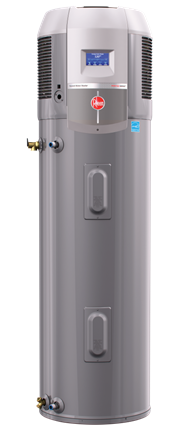
For more information about the Rheem Prestige™ Series Hybrid Heat Pump, please visit: www.rheem.com
For more information about the ecoEII OC Net Zero Project, please go to: www.zeroenergy.ca

Press Release: A Quebec First in Laval

Groundbreaking VIPs from left to right: Salvatore Ciarlo (Technical Services Manager, Owens Corning Canada), Paolo Galati (Councilor, City of Laval), Meli Stylianou (Manager, CanmetENERGY, Natural Resources Canada), René Voyer (Founding Member, Construction Voyer), Guy Ouellette (Député de Chomedey), Michael Lio (President, buildABILITY Corporation), Pascal Voyer (Co-Owner, Construction Voyer), Jean-Francois Voyer (Co-Owner, Construction Voyer)
A Quebec first in Laval
Construction Voyer building six net zero energy homes as part of Natural Resources Canada’s ecoENERGY Innovation Initiative’s national Net Zero Energy project
(June 22, 2015, Laval, QC) Lucky homeowners in Laval will soon be moving into new net zero energy homes. Today, Construction Voyer broke ground on six condos as part of a national program that will see a minimum of 25 net zero energy (NZE) homes built across Canada. NZE homes produce as much energy as they consume, on an annual basis.
Construction Voyer is the only Quebec-based homebuilder selected for the project, which is part of Natural Resources Canada (NRCan)’s ecoENERGY Innovation Initiative (ecoEII). The condos, expected to be completed by March 2016, are being built in the Duvernay East neighbourhood of Laval, close to the Highway 25 bridge.
“Our Government is proud to invest in initiatives like the Net Zero Homes project that create high-quality jobs and further strengthen Canada’s reputation as a leader in energy innovation,” said the Honourable Greg Rickford, Canada’s Minister of Natural Resources. “We remain committed to supporting companies that find solutions to protect the environment and lower energy bills for Canadians.”
“Speaking on behalf of staff and management, Construction Voyer is thrilled to be participating in the NZE demonstration project,” said Jean-Francois Voyer, Co-Owner, Construction Voyer. “It is proving to be a terrific experience which is allowing us to display our expertise in building high quality homes, while always looking for ways to utilize cutting-edge technology.”
A number of features allow the condos to achieve the drastic reductions in energy consumption required to meet NZE standards, including innovative heat and cooling equipment, solar PV panels on the roof, and the innovative exterior insulation CodeBord® Air Barrier System from Owens Corning Canada.
“We are extremely proud to be working with a true leader and energy efficiency ambassador in the building construction industry in Quebec,” stated Salvatore Ciarlo, Technical Services Manager, Owens Corning Canada. “Coupled with all of our project partners, we look forward to making the net zero project in Quebec a huge success that will be the benchmark across Canada and North America.”
NRCan is providing $1.96 million in support for professional services required for the planning, design and construction of the houses. The balance, over $2 million, will come from Owens Corning Canada, participating builders and the building industry in the form of in-kind contributions to fund the construction of the homes. The project, managed by buildABILITY Corporation, includes five builders across Canada: Construction Voyer (Laval, Quebec); Mattamy Homes Limited (Calgary, Alberta); Reid’s Heritage Homes (Guelph, Ontario); Minto Communities (Ottawa, Ontario); and Provident Development Inc. (Halifax, Nova Scotia).
Media Contact:
Jean-François Voyer | Co-owner, Director of Business Development | Construction Voyer
(450) 963-8300 | jfvoyer@voyer.ca
Note to Editor:
A live video stream of construction can be viewed here:https://www.workzonecam.com/projects/buildability/ocnetzero/workzonecam
Construction Voyer, founded in 1973, has built over 6,000 residential units: single-family dwellings, condominiums and rental buildings. Although the company originally earned its reputation primarily in Laval and cities along the northern belt, in 1998 it began expanding its activities onto the island of Montreal. Recently, Construction Voyer has developed an expansion plan to extend activities into new territories.
Owens Corning Canada is part of Owens Corning, a US$5.2 billion company with 15,000 employees worldwide, including 654 in Canada. Owens Corning and its family of companies are a leading global producer of residential and commercial building materials, glass-fiber reinforcements, and engineered materials for composite systems. A Fortune® 500 company for 60 consecutive years, the company is committed to driving sustainability by delivering solutions, transforming markets, and enhancing lives. Owens Corning operates 4 plants in Canada, manufacturing PINK® insulation and other energy-saving products.
The ecoENERGY Innovation Initiative (ecoEII), announced in the 2011 Budget, is a $268 million program searching for long-term solutions to eliminate air pollutants and greenhouse gas emissions from energy production. Eligible projects must be demonstration or research & development.
For more information about the ecoEII Net Zero project, please visit: www.zeroenergy.ca
Leading Students to Greatness: Mentoring for the University of Toronto’s Hatchery Program
The UofT hatchery builds mentorship relationships between students and professionals to help turn innovative ideas into successful entrepreneurship ventures and start-ups. As mentors, we contribute and lead the new generation to great start-ups from our valuable insights and perspectives.
In 2014, buildABILITY provided $8,100 of in-kind support to a number of Hatchery teams.
For more information on the UofT Hatchery program, please visit: http://hatchery.engineering.utoronto.ca/

OHBA Magazine: Making an Airtight Case
Check out our article in OHBA’s Spring 2015 issue where buildABILITY’s President, Michael Lio, shares a few words on the growth of Energy Star.

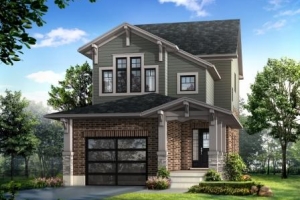
CBC Radio: What is a Net Zero Home and How Can it Help the Environment?
Blake Seeberger, Senior Vice President, Residential at Reid’s Heritage Homes talks about Net Zero homes, the cost/benefit of buying one, and how it is going to become the future of energy efficient homes on CBC Radio.
Listen to the segment here: http://www.cbc.ca/player/Radio/Local+Shows/Ontario/The+Morning+Edition+-+K-W/ID/2540875155/

Better Builder: New Research for Healthier Homes


Toronto Builder: They Don’t Build Them Like They Used To – They Build Them Better
Michael Lio’s article, “They Don’t Build Them Like They Used To – They Build Them Better”, is featured in the Fall 2014 issue of BILD’s Toronto Builder magazine. Check out a preview below:

Press Release: First Groundbreaking in National Net Zero Housing Community Demonstration Project Managed by buildABILITY Corporation

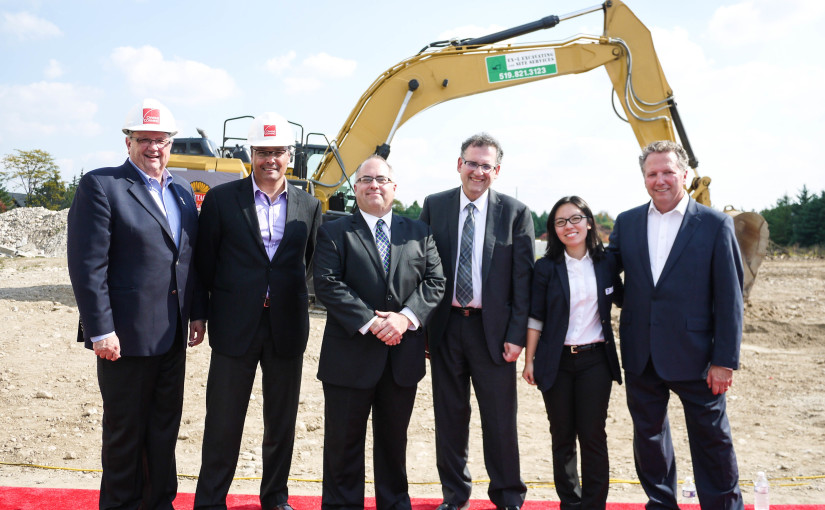
Monday, September 29, 2014 – On site at the Groundbreaking event ceremony
From left to right, Andy Goyda (Market Development Manager, Owens Corning Canada), Salvatore Ciarlo (Technical Services Manager, Owens Corning Canada), Blake Seeberger, (Senior Vice-President, Residential, Reid’s Heritage Homes), Michael Lio (President, buildABILITY Corporation), Candice Luck (Director, Strategy & Programs, buildABILITY Corporation), and Ric McFadden (Vice President & General Manager, Building Materials, Owens Corning Canada)
—
Today, Reid’s Heritage Homes hosted the inaugural groundbreaking ceremony for a national net-zero energy homes (NZE) demonstration project. Present to mark the occasion was Harold Albrecht, Member of Parliament for Kitchener—Conestoga (Ontario), on behalf of the Honourable Greg Rickford, Canada’s Minister of Natural Resources. He was joined at the podium by City of Guelph Mayor, Karen Farbridge, executives from Reid’s Heritage Homes and representatives from Owens Corning Canada and The University of Guelph.
The project involves five Canadian production homebuilders constructing a total of 25 net-zero energy homes, for which buildABILITY Corporation is the project manager and lead consultant. The project is funded in part by the federal government’s ecoENERGY Innovation Initiative (ecoEII), along with contributions from each participating builder, industry suppliers and Owens Corning Canada.
“Our government is proud to invest in programs like the ecoENERGY Innovation Initiative which create high-quality jobs and further strengthen Canada’s reputation as a worldwide leader in energy innovation,” said Mr. Albrecht. “We remain committed to supporting companies that are finding solutions to protect the environment and lower energy bills for all Canadians”.
The project’s 25 homes, five from each builder, will significantly increase the total number of NZE homes found across the country, homes that over a year generate all of the energy they consume. While many people already agree that net zero is the future of the building industry, many current NZE homes are custom-built projects, using elaborate designs and expensive technologies and inputs, disconnected from the realities of affordability.
By focusing on affordability and market acceptance, the project’s production builders, have taken on the unique challenges associated with mainstreaming NZE practices. This project acts as a platform for the broader adoption of NZE across Canada. “The project’s builders and consultants and Owens Corning Canada are leaders in their markets, and should be commended for their initiative and enterprise,” said Michael Lio, President of buildABILITY.
“It is hugely rewarding as project managers to see the pieces coming together,” said Candice Luck, the Project Manager. buildABILITY initiated the project concept, and promoted its vision for better homes for Canadians to Owens Corning and Natural Resources Canada (NRCan). The firm developed an innovative project structure by strategically picking five regional teams that include five of the largest production housing builders in five of the five most prominent production housing locations in the country each paired with a local housing consultant to provide day to day support.
buildABILITY has been choreographing this national project, including facilitating conversations with net zero experts across Canada, coordinating a national net zero design charrette, and securing project partners, bringing likeminded companies together.
Unlike other industries, innovations in housing do not seamlessly move through market transformation stages and it can take decades to adopt new building practices. “While most organizations work within the confines of one market transformation stage”, said Mr. Lio, “buildABILITY exists in the space between each stage, connecting, and integrating. Our focus is on the largest and typically the most expensive consumer product – the house. The company’s deep technical expertise and its understanding of the diffusion of innovation allow it to act as a change catalyst for organizations and for the housing industry as a whole.”
“We are very pleased with the announcement of the groundbreaking today. It has been an honour to work with the Reid’s Heritage Homes, Owens Corning Canada, and the other builders and consultants involved in this project. We are excited to see the finished homes, and to start to see the impact of this project on the marketplace.”
—
For more information on the net zero project, please visit www.zeroenergy.ca
buildABILITY Corporation provides a variety of services – from training to publication development to consulting. With a focus on helping clients to adapt to change, buildABILITY inspires action by building knowledge, capacity, and abilities. Since 1983, members of the buildABILITY team have been involved in projects commissioned by various organizations including national and provincial governments, housing authorities, utilities, trade associations, builders, developers, and product manufacturers. buildABILITY builds momentum with companies ready to transform the industry, like these NZE builders and consultants who are changing the game on net zero. For more information on buildABILITY’s projects visit www.buildability.ca.
Project Contact: Candice Luck | Director of Strategy and Programs | 416.961.3487| candice@buildability.ca
The ecoENERGY Innovation Initiative (ecoEII), announced in the 2011 Budget, is a $268 million program searching for long-term solutions to eliminate air pollutants and greenhouse gas emissions from energy production. Eligible projects must be demonstration or research & development.

Better Builder: The Municipal Issue
In the Summer 2014 issue of Better Builder Magazine, Michael Lio authored two articles: Working with Municipalities and Building a More Weather-Resilient Home.