Latest Net Zero Videos: JELD-WEN Canada and Rheem Canada

In March 2016, we completed the largest net zero energy housing community project to date (read more about it at www.zeroenergy.ca). In our commitment to share our learnings with the building industry, we’ve created a mini-video series to tell the story of our partners. Rheem Canada and JELD-WEN Canada were pivotal in helping our 5 builders achieve net zero energy performance. Rheem’s innovative Hybrid Heat Pump Water Heater and JELD-WEN Canada’s high performance triple pane windows are two key net zero energy technologies that every builder should consider. Take a look at these two videos to hear their story and learn more about the technology.


Press Release: Canadian Net Zero Energy Home Builders Recognized for Contribution to Industry-Changing Demonstration Project

MEDIA RELEASE: CANADIAN NET-ZERO ENERGY HOME BUILDERS RECOGNIZED FOR CONTRIBUTION TO INDUSTRY-CHANGING DEMONSTRATION PROJECT
Thursday, March 10th, 2016

(March 10, 2016, Ottawa, ON) Canada’s elite net-zero energy (NZE) home builders gathered last night in Ottawa to celebrate and accept awards for their contribution to the largest Canadian net-zero energy (NZE) housing demonstration project by advancing building science and responding to the global climate change challenge.

A total of 26 homes were built in four provinces as part of the Net-Zero Energy Housing demonstration project with Natural Resources Canada (NRCan) and Owens Corning Canada.

The five project home builders (and community locations) are: Construction Voyer (Laval, Quebec); Mattamy Homes (Calgary, Alberta), Minto Communities (Ottawa, Ontario); Provident Developments (Halifax, Nova Scotia); and Reid’s Heritage Homes (Guelph, Ontario).


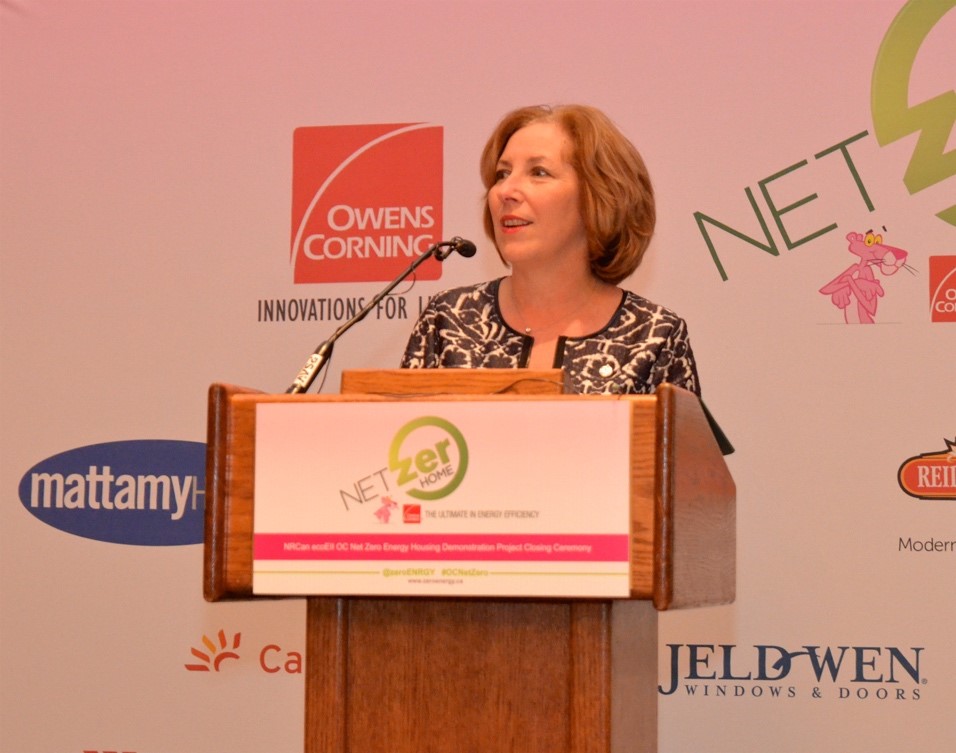
Parliamentary Secretary to the Minister of Natural Resources, Kim Rudd was on hand to congratulate the five builders and all those involved in the project


“With support from Natural Resources Canada’s ecoENERGY Innovation Initiative (ecoEII), five home builders and leading industry suppliers, we have proven that net-zero energy housing can be built using existing technology, at prices that are accessible to the average homebuyer,” stated Salvatore Ciarlo, Technical Services Manager, Owens Corning Canada. “Building entire net-zero communities is a viable, short-term goal”one that we are much closer to as a result of this project’s success.”

Mr. Ciarlo was joined by Kim Rudd, Parliamentary Secretary to the Honourable Jim Carr, Minister of Natural Resources Canada to present the awards.

“Congratulations to Owens Corning Canada, the five participating home builders and the many important players involved in this impressive project,” said Parliamentary Secretary Rudd. “Our government proudly shares your vision of energy-efficient home construction. These net-zero energy homes will reduce our environmental footprint, create clean jobs of the future and help Canada become a global leader in low-carbon energy.”

Measured over a year, a NZE home can potentially produce as much energy as the home consumes. This could mean an average annual energy bill of zero for its homeowner. Natural Resources Canada data suggests that housing accounts for 15% of the country’s greenhouse gas emissions. These NZE energy homes can significantly reduce Canada’s energy use, reliance on fossil fuels, and carbon and greenhouse gas emissions.

“A net-zero energy home loves you back,” explained Kevin Lee, CEO of the Canadian Home Builders’ Association (CHBA). “It shelters you from rising utility costs, it delivers exceptional comfort, it works better, and it lasts.”

Working with NRCan and the CHBA, the outcomes of the home designs and the learnings from the five builders will be shared and disseminated to the industry. This was not only a demonstration project to show that NZE homes are feasible in today’s market but it is also a knowledge transfer success story. Participants of this project do not believe that the NZE home recipe should be a secret. These innovative builders have become educators and mentors to their peers, sharing their learnings and designs at numerous building industry events.


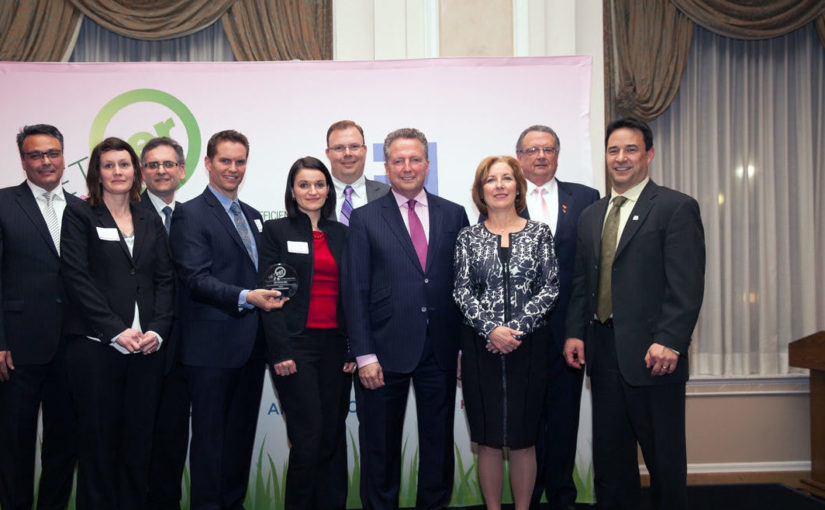
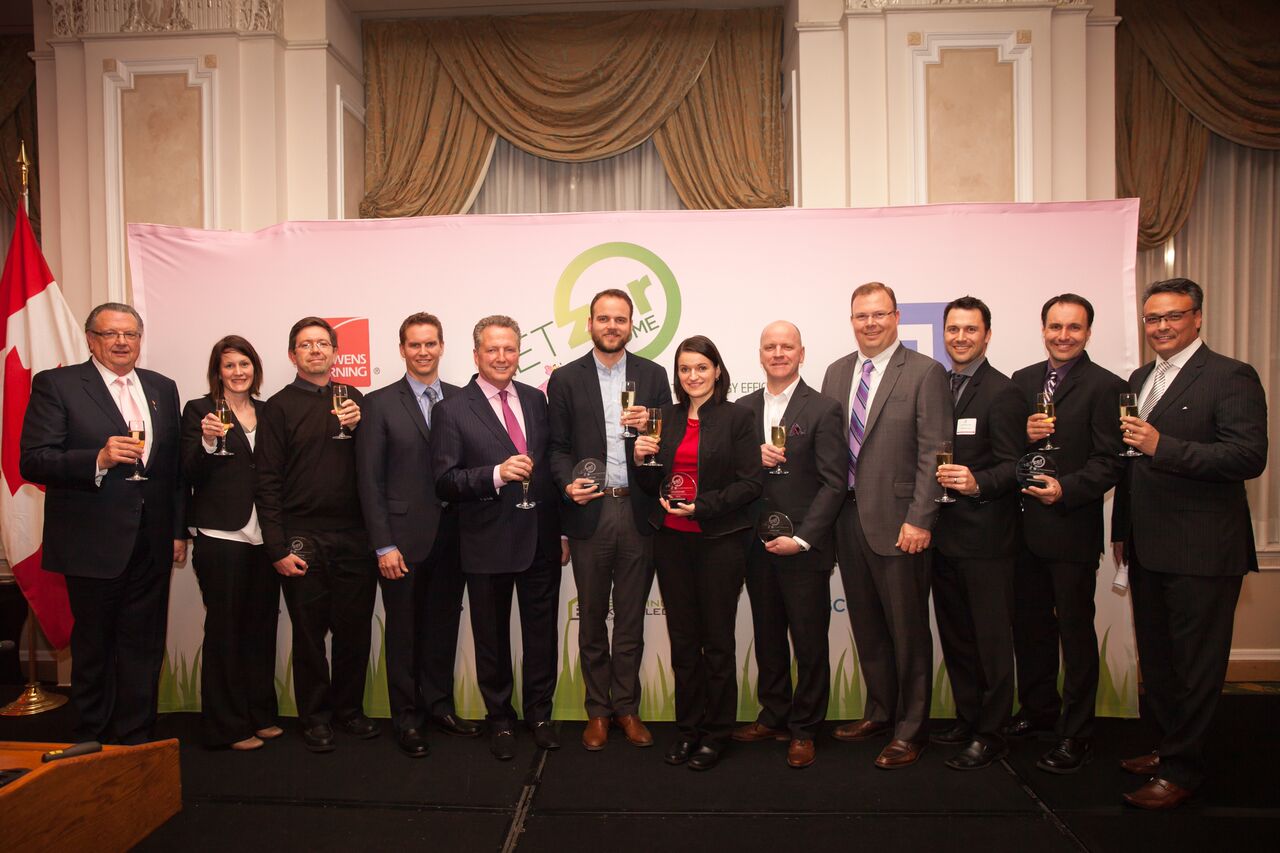
Owens Corning Canada presented home builders with an award recognizing their contribution to the successful net-zero energy project


“This is an emerging technology. As electricity prices go up (and they are and they will) and as solar panel prices go down (and they have and they will) businesses and the public will increasingly adopt these measures,” said Michael Lio of buildABILITY Corporation, a renowned building scientist and manager of the project. “This initiative helped to debug the adoption process so in future, these measures can be adopted seamlessly. To use an analogy: we have built a road through uncharted territory so that others can drive through effortlessly.”

All the NZE homes will eventually be sold to the public. Beyond this project, these builders will offer net-zero energy-ready (NZEr) homes as a standard or an upgrade on a production scale for their next subdivisions“ featuring energy efficiency equivalent to their full NZE houses. Preliminary simulations show that some of these NZEr homes have an impressive 70% reduction in energy costs compared to comparable houses built to code. Solar panels to make them full NZE will be offered as an option.

“While the homes met the same standards to achieve net-zero, each community arrived in a slightly different way,” concluded Ciarlo. “This not only points to the ingenuity and skill of the local home builders, technical experts, equipment suppliers and tradespeople, but demonstrates that we are ready to build net-zero across Canada’s diverse climatic regions.”

For a profile of each net-zero Energy community and more information about the project visit www.zeroenergy.ca.

-30-

For more information, or to schedule interviews, please contact:

Michael Zupanic, ECO Strategy

416-972-7404 or mzupanic@ecostrategy.ca

Owens Corning (NYSE: OC) develops, manufactures and markets insulation, roofing and fiberglass composites. Global in scope and human in scale, the company’s market-leading businesses use their deep expertise in materials, manufacturing and building science to develop products and systems that help save energy and improve comfort in commercial and residential buildings. Through its glass reinforcements business, the company makes thousands of products light, strong and durable. Ultimately, Owens Corning people and products make the world a better place. Based in Toledo, Ohio, Owens Corning employs about 15,000 people in 26 countries. It has been a Fortune 500® company for 61 consecutive years. For more information, please visit www.owenscorning.com.

The ecoENERGY Innovation Initiative (ecoEII), announced in the Budget 2011, the Next Phase of Canada’s Economic Action Plan, is a $268 million program searching for long-term solutions to eliminate air pollutants and greenhouse gas emissions from energy production and use. Eligible projects must be demonstration or research and development.

buildABILITY Recognized for their Contributions On The Net Zero Energy Home Project

On March 9th, 2016, Canada’s net zero home builders gathered in Ottawa, Ontario to celebrate the wrap up of the NRCan OC ecoEII Net Zero Energy Housing Project.

Owens Corning Canada kindly recognized buildABILITY and other partners on the project for their hard work and contribution to the project in the last 4 years.

Michael Lio, President of buildABILITY, spoke about net zero and what the future will hold on this emerging technology:

“This is an emerging technology. As electricity prices go up (and they are and they will) and as solar panel prices go down (and they have and they will) businesses and the public will increasingly adopt these measures,” said Michael Lio of buildABILITY Corporation, a renowned building scientist and manager of the project. “This initiative helped to debug the adoption process so in future, these measures can be adopted seamlessly. To use an analogy: we have built a road through uncharted territory so that others can drive through effortlessly.”

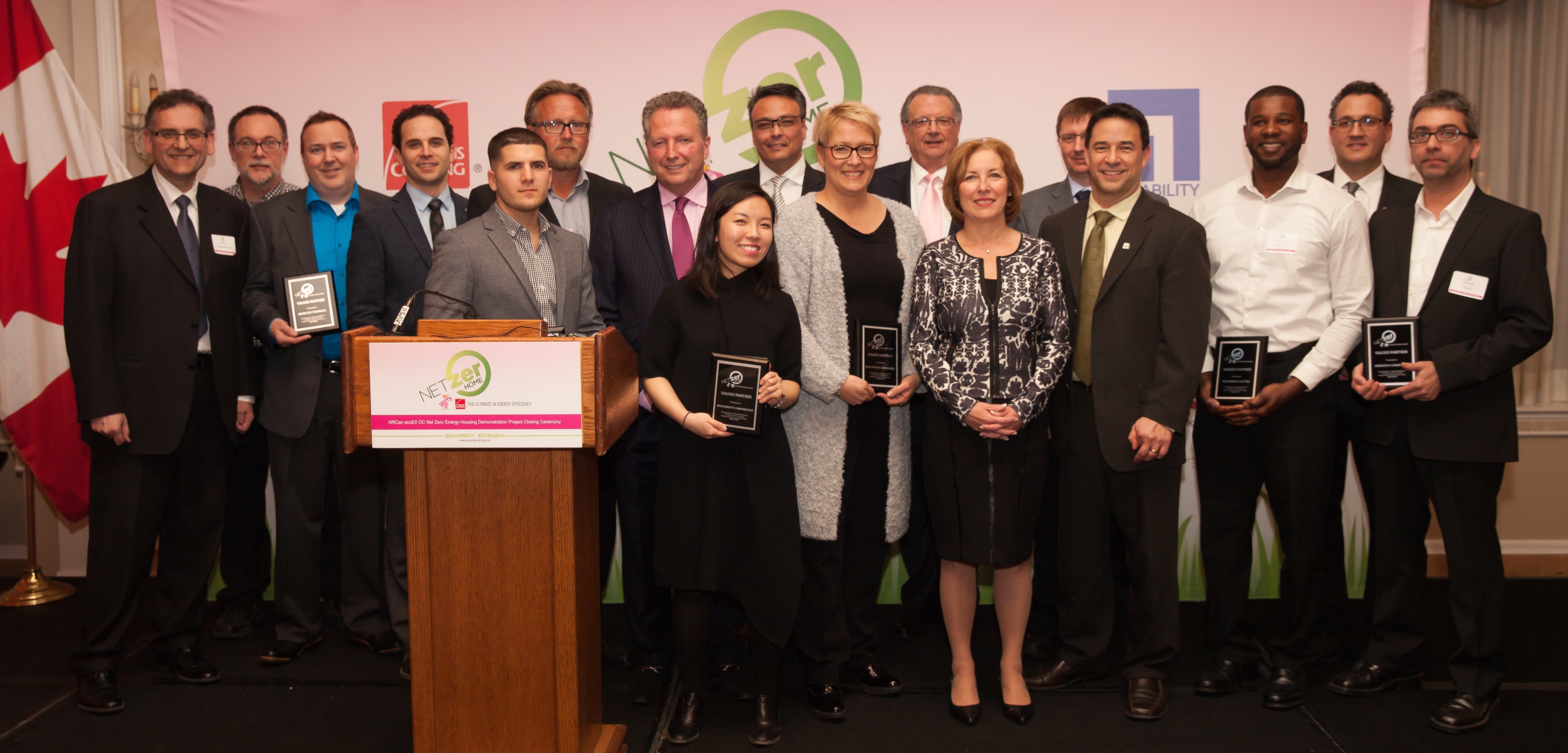
net zero picture.

From left to right: Michael Lio (buildABILITY Corporation), Colin Currie (Consultant), Dennis Naugler (Hawk-Eye Technical), Clayton Bond (MMM Group), Mehmet Ferdiner (Building Knowledge Canada), Mark Muzyka (Rheem), Ric McFadden (Owens Corning Canada), Candice Luck (buildABILITY Corporation), Salvatore Ciarlo (Owens Corning Canada), Lisa Bergeron (JELD-WEN), Andy Goyda (Owens Corning Canada), Kim Rudd (Parliamentary Secretary to the Minister of Natural Resources), Glen Brown (Leidos Canada), Kevin Lee (CHBA), Clive Carr (Mitsubishi Electric), Dino Gerbasi (Ameresco), John Scourias (Ameresco)

REMI Network: Net Zero Project is Building Industry Milestone

We have been proud to have been able to be involved in the Net Zero Housing Project from its initiation and now that the homes are starting to be completed, we are grateful for the positive responses to the results. Thank you REMI Network for the recognizing us in the article below:

Net zero project is building industry milestone

Canadian initiative sets out to prove energy efficiency is consumer-friendly and accessible

Thursday, September 17, 2015
Rebecca Melnyk

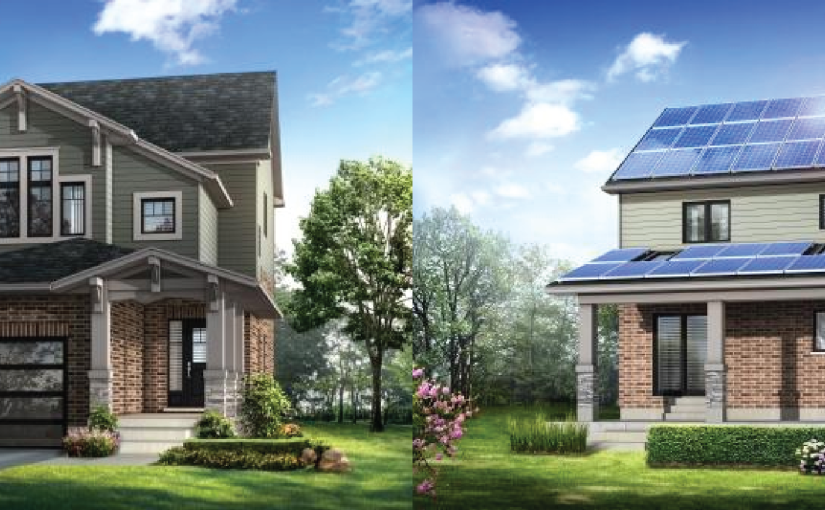
A calm, suburban neighbourhood in the south end of Guelph, Ontario, buzzes as people from various building organizations gather at 197 Goodwin Drive. They’re all standing around a new home that blends well into the Westminster Woods community aesthetic, but was built with a much different intention as the 33 solar photovoltaic (PV) panels on the back roof might indicate.

Unlike other net zero energy (NZE) homes that have been constructed across the country, this one, the first of 25 to be completed as part of a national demonstration project, uses consumer-friendly technology and products geared to the mainstream public.

“This shows a net zero home is not only possible, but also possible on the consumer scale where it can be available to everybody,” Guelph Mayor Cam Guthrie said before a ribbon cutting ceremony. “The home doesn’t just demonstrate new and exciting technologies; it changes the way homes are actually built.”

Rather than viewing the project as a one-off, the builder, Reid’s Heritage Homes, used its standard construction plans in order to replicate the build in a production setting, as well as complete a home others can duplicate.

Reid Heritage Homes was selected to be part of the ecoENERGY Initiative (ecoEII) to build a total of five homes in Guelph. Other building companies—Minto, Mattamy Homes, Provident and Construction Voyer—will each build five NZE residences to be located in Ottawa, Alberta, Nova Scotia and Quebec, respectively. Each builder is working with a technical consultant. In this case, Reid’s Heritage Homes has been working alongside Building Knowledge. Upon overall project completion in 2016, the amount of NZE homes in Canada is expected to double.

Andy Goyda, Canadian builder lead and marketing development manager for Owens Corning Canada, a leader in the project, was also on hand to promote the technologies that make the net zero home healthier, affordable and comfortable. One key feature lies beneath the façade, in the form of the Owens Corning CodeBord air barrier system that helps achieve high levels of air tightness to meet net zero performance standards.

“Net zero starts with the envelope,” said Goyda. “If it isn’t super-insulated, we don’t go anywhere; if it is, everything falls into place.”

This “everything” extends to the installation of high-efficiency water heaters, air source heat pumps, triple-pane, low-e glass windows and market-ready renewables like solar PV and electrical storage capacity.

As for the air barrier system, which insulates the exterior of the building preventing thermal bridging from occurring and increasing wall insulation to R-38, a consequential reduction in condensation adds for more comfort and efficiency.

All of these efficient measures will be closely examined. Jennifer Weatherston, director of innovation for Reid’s Heritage Homes, says the home will be monitored for a two-year period as data is collected and analyzed. She also intends to observe how the technology influences owners.

“Do you take the energy device and throw it in the drawer after six months or do you keep learning and moving forward, changing behaviour?” Weatherston questions. “It will be interesting to see how people live in these homes.”

And with the first build set for listing on September 19, the homebuilders will also get a better feel for how many consumers are willing to pay a little more than the average home.

“Guelph is a greener area and more receptive to this type of thing and the location is ideal,” added Weatherston. “But, at the end of the day, what is going to sell these homes is the innovation, home comfort, the improved air quality and better design with the insulation.”

The project has come a long way since 2013 when the Natural Resources Canada first issued an announcement that it had $262 million to promote research and development in demo projects to improve energy efficiency across Canada. BuildABILITY, project manager and lead consultant for the ecoEII project, worked with Owens Corning Canada to develop a proposal that would take net zero to an affordable community production housing platform. And, Voila.

The remaining 24 homes will be complete by the end of 2016, while the initiative aims to leave an everlasting impression on the state of NZE. That’s not only in the residential sector, but other sectors as well.

Candice Luck, director of strategy and programs for buildABILITY, uses the analogy of “helping to build a road through uncharted land so that others can drive through effortlessly.”

“As electricity prices go up (and they are and they will) and as PV prices go down (and they have and they will) businesses and the public will increasingly adopt these measures,” adds Luck. “Our project promises to debug the adoption process so future measures can be adopted seamlessly.”

To view the article on the REMI site, visit here: https://www.reminetwork.com/articles/net-zero-project-a-milestone-for-building-industry/

Michael Lio to Speak at the 2015 Smart Net Zero Resilient Buildings and Communities Symposium

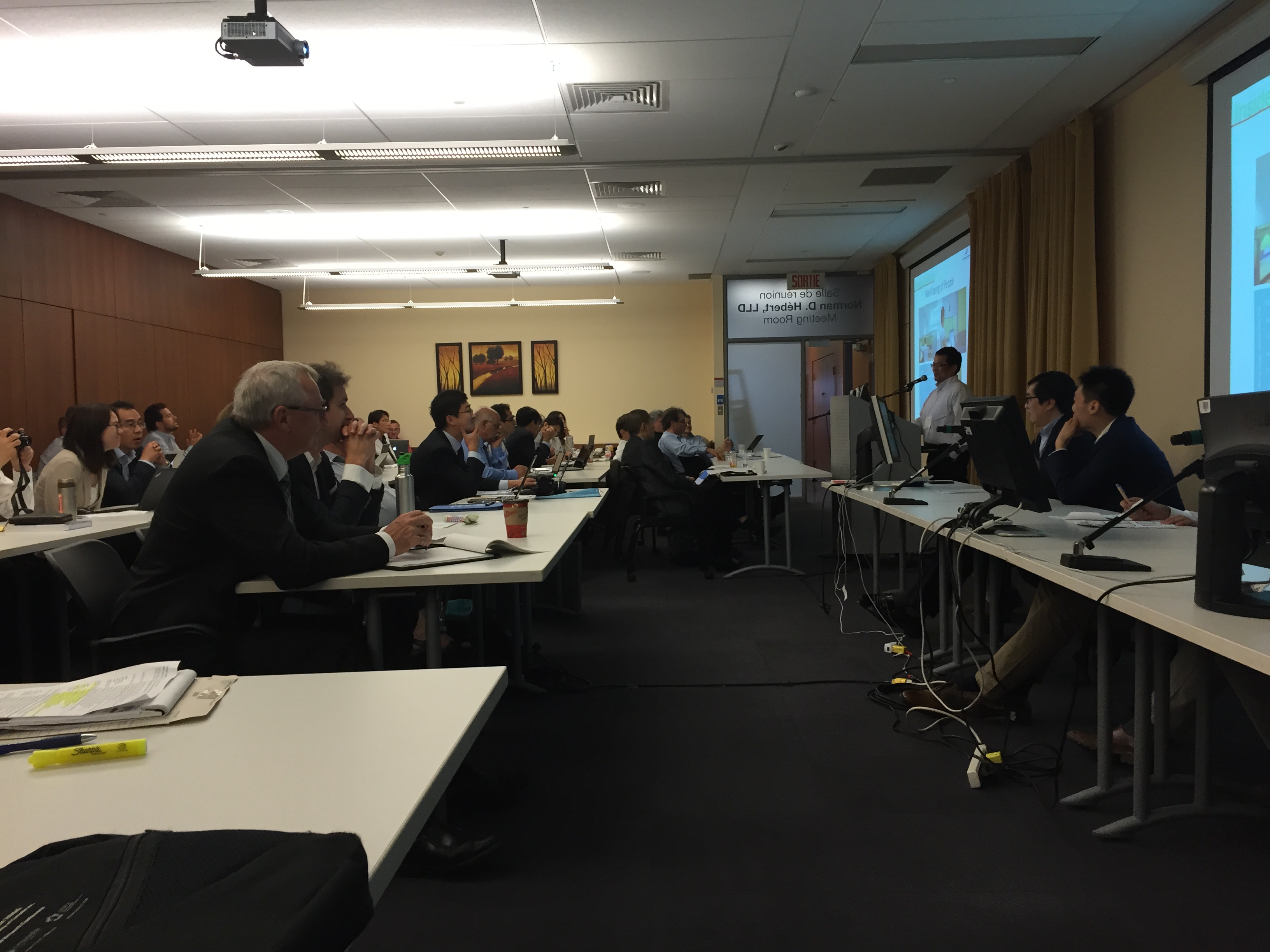
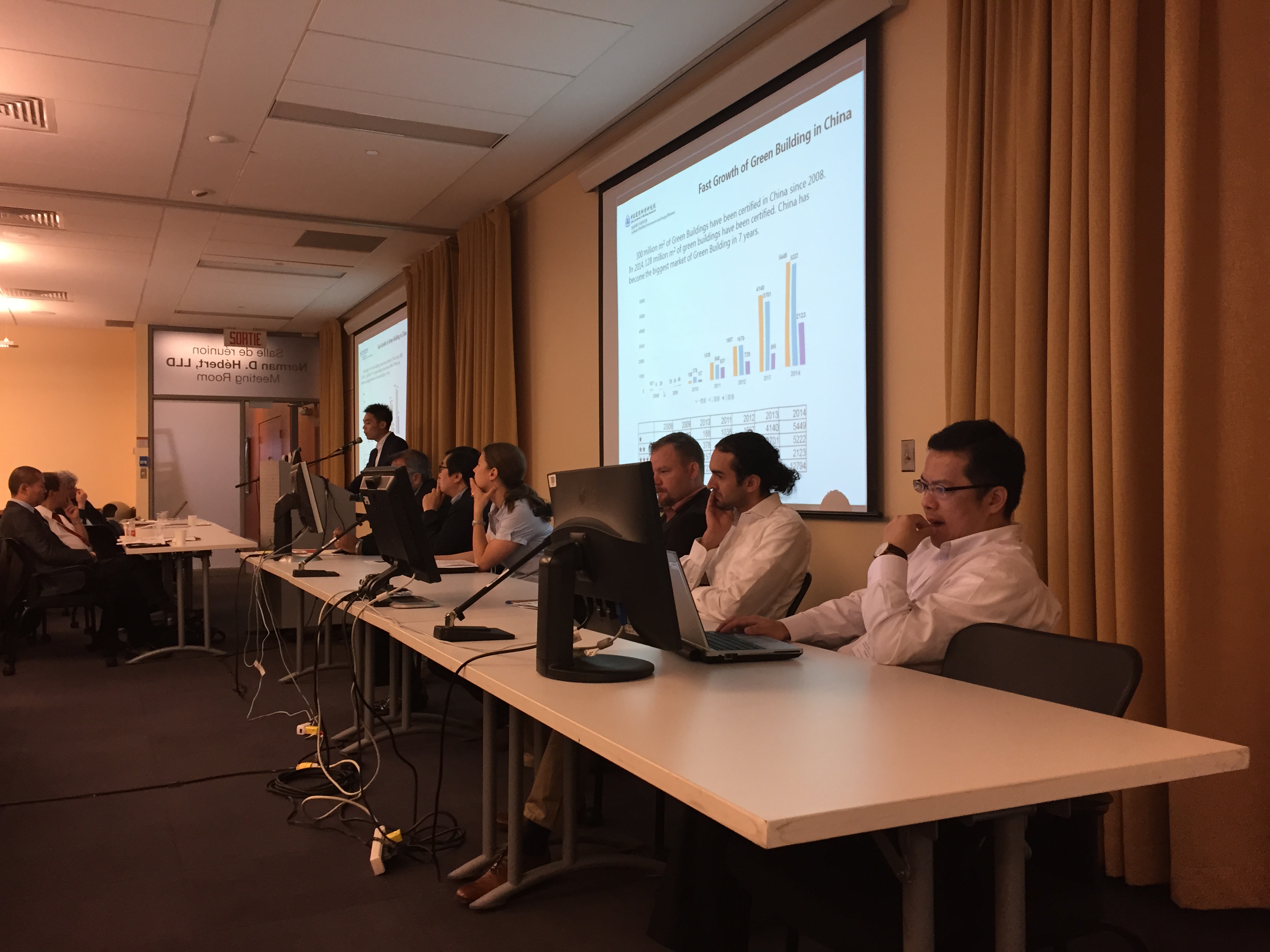
Michael Lio was invited to speak at the 2015 Smart Net Zero Resilient Buildings and Communities Symposium organized by Concordia University’s Centre for Zero Energy Building Studies, the International Initiative for a Sustainable Built Environment and the Asia-Pacific Economic Cooperation on August 20, 2015. He presented Affordable Net Zero Housing Communities in Canada: The Owens Corning Canada National Net Zero Project.  Michael described the project including the technologies each production builder has adopted. He spoke to the need for simplicity as net zero housing moves towards mainstream.  Michael also addressed the need to consider the homeowner’s capacity to act as a property manager for this new type of housing.

For any questions, please contact Candice Luck at candice@buildability.ca.

Fine Homebuilding: Canada Launches a Net-Zero Project

Michael Lio, President, speaks to Fine Home Building about the Net Zero Project buildABILITY has been working on with Owens Corning Canada.

Canada Launches a Net-Zero Project

Aug 03, 2015

In Canada, private and public interests are working on a common problem: How to build net-zero-energy housing that average homebuyers can afford.

Asked by officials in the government’s ecoEnergy Innovation Initiative for some new ideas on how to encourage energy-efficient building, a company called buildABILITY Corp. put together a program in which five separate builders were invited to tackle the net-zero problem in whatever way they chose. As a result, single-family homes and condominiums are going up in five cities in four provinces as builders work with their own consultants to produce affordable net-zero-energy houses in their respective markets.

Natural Resources Canada chipped in $2 million from the national $278 million ecoEnergy program. Owens Corning Canada provided insulation products for free, and builders themselves came up with in-kind contributions that equaled the government’s ante, says buildABILITY president Michael Lio. The net-zero houses, all of which must be completed by next March, will be sold privately after the government double-checks to make sure they really will produce as much energy as they use.

The larger goal of the Owens Corning Net Zero Housing Community Project is to help production builders figure out how net-zero building practices can become part of their regular repertoires.

“We’ve been talking about it for a long time,” Lio said recently. “There have been lots of net-zero buildings that have been constructed both in the U.S. and in Canada, but there haven’t been many activities that focused on production builders, and even fewer on affordability. So at the heart of this project is to work with large production tract builders to bring them to net-zero so it’s more affordable for their customers, to simplify it and drop it into their assembly-line processes.”

Builders find common ground

Builders are working independently. There’s no central agency directing their work, and there’s no common script they have to follow. Even so, Lio says, builders have settled on very similar approaches. “The technologies are off the shelf,” he says, “very accessible.”

Some of the common building characteristics:

  • Grid-tied photovoltaic systems for on-site renewable energy, with arrays rated at about 10kw.
  • Exterior walls with R-values between 38 and 44. Wood-framed walls have cavity insulation of fiberglass batts and an exterior wrap of extruded polystyrene rigid insulation.
  • Airtightness, measured with a blower door, of 1.5 air changes per hour, or lower, at a pressure difference of 50 pascals.
  • Triple-paned windows.
  • Although some builders have chosen small-output furnaces, many others are using cold-climate air-source heat pumps.
  • Heat-pump water heaters.
  • Interior polyethylene vapor barriers.
  • Attics insulated with batts or blown in fiberglass to a range of R-50 to R-70.

Lio says the units have fairly small heating loads (most of the projects are located in Climate Zone 6). Half the 10kw output of the PV arrays are on average used for base electric loads, Lio says, with one quarter devoted to space heating and the balance to domestic hot water.

Builders will sell the houses at market rates, Lio says, but because of program restraints they won’t be allowed to make a profit on building components that contribute to net-zero operation.

Construction costs are similar

Projects are underway in Laval, Quebec; the Ottawa suburb of Kanata; Calgary, Alberta; Halifax, Nova Scotia; and Guelph, Ontario, just to the west of Toronto. Lio says land prices vary widely, but construction costs are similar across the country. These houses range from one-bedroom condos to single-family houses of about 2000 sq. ft. in the $500,000 price range.

The incremental cost of getting to net-zero on a single-family home is looking like $60,000 to $80,000, Lio says, a 12% to 16% premium over the cost of a conventional house. Lio says it’s too soon to know whether Canadian homebuyers will be willing to pay it.

“I think that as a full-on market initiative, we’re really early,” Lio says. “I suspect there will be some homebuyers who have an eye on innovation, who want to be the very first to adopt a particular technology and will certainly buy these houses.

“We’ve seen dramatic shifts in the pricing on some of these systems, particularly on-site generation, and as some of these systems become even more affordable and builders start to adopt the technology in volume, then it would be appropriate to have a conversation about what the market would bear. Right now, it’s conjecture. Prices are high, numbers are low, and it’s really unfair to talk about would someone be willing to dish out $80,000.”

Building on a Canadian tradition

Canada has a long history of high-performance building and introduced its R-2000 program in the early 1980s. As Lio points out, standards typically become more demanding as time passes.

“The R-2000 is in many regards the springboard for these net-zero houses,” he says. “R-2000 is an energy standard, but it doesn’t include on-site generation. These net-zero houses not only demonstrate the new type of energy efficiency that’s embedded in the R-2000 standard but it takes that next leap and embeds on no-site renewables.

“That’s the real difference,” he adds. “It’s a continuum. We’ve been at it for a long time and we’ve made lot of mistakes along the way, but it’s pretty obvious that there’s this continuum and these programs that are voluntary eventually become the stuff of code minimums.”

To read the article on Fine Homebuilding, please visit: http://www.finehomebuilding.com/2015/08/03/canada-launches-a-net-zero-project


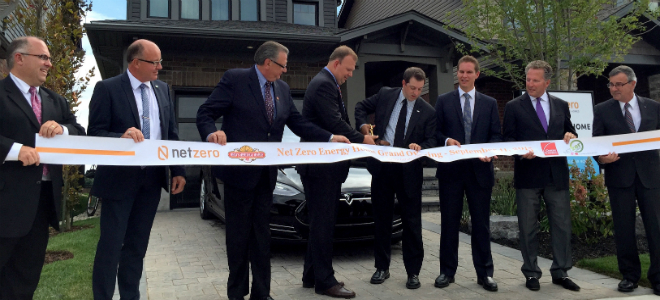
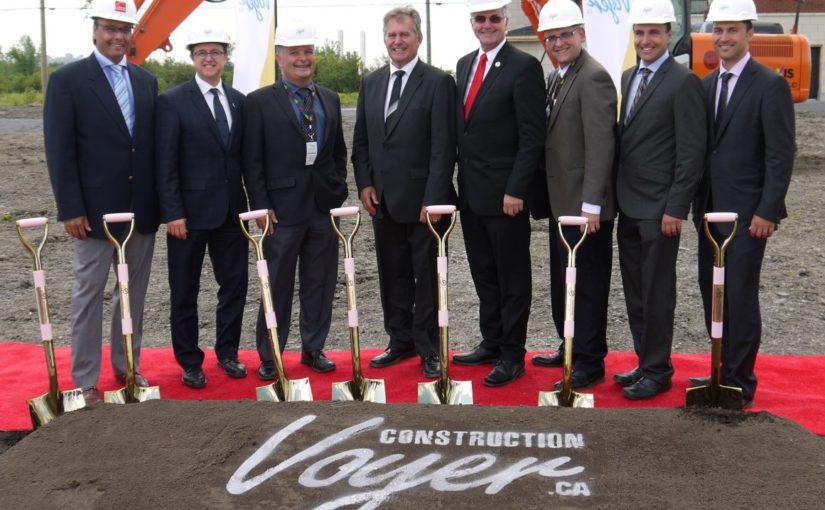
Construction Voyer Groundbreaking event, from left to right:  Salvatore Ciarlo (Technical Services Manager, Owens Corning Canada), Paolo Galati (Councilor, City of Laval), Meli Stylianou (Manager, CanmetENERGY, Natural Resources Canada), René Voyer (Founding Member, Construction Voyer), Guy Ouellette (Député de Chomedey), Michael Lio (President, buildABILITY Corporation) Pascal Voyer (Co-Owner, Construction Voyer), Jean-Francois Voyer (Co-Owner, Construction Voyer)


Live stream of Construction Voyer’s net zero site:  https://www.workzonecam.com/projects/buildability/ocnetzero/workzonecam

Blog Series: Significant Code Changes Must be Supported by Industry Training

buildABILITY Blog Series: Catching Up with Michael Lio

We recently had a chance to test drive the energy efficiency provisions of the National Building Code.  For builders in many parts of the country the transition to effective R-values I predict will be a significant challenge.  New tools like the Canadian Wood Council’s  online Wall Thermal Design Calculator (http://cwc.ca/resources/wall-thermal-design/) will help, but builders will need to navigate the many pages of guidance within the NBC to master the new approach. 

 Some parts of the country have already adopted the NBC provisions while others like Alberta have committed to adopting them next year.  In Ontario, the Ontario Building Code has taken a very different course, sticking to nominal R-values and predefined construction packages that blend envelope insulation and mechanical system efficiency.  Despite Ontario’s simpler rule set, Ontario’s transition was supported by a very significant training effort before the rules came into effect.

 Training which we developed and delivered reached over a thousand Ontario builders and made the transition to Ontario’s rules almost seamless.  We also developed targeted training for building official and architects, giving each industry stakeholder the same knowledge platform.  Regions that adopt the national rules will need to consider industry training in a similar way.  Training will allow builders to understand the NBC provisions and to harness the potential to innovate which exists within the rule set.

–  Michael Lio